20歳未満の飲酒は法律で禁止されています
【容量 NET】750ml
【産地 vineyard】フランス France / ロワール Loire
【使用品種 variety 】
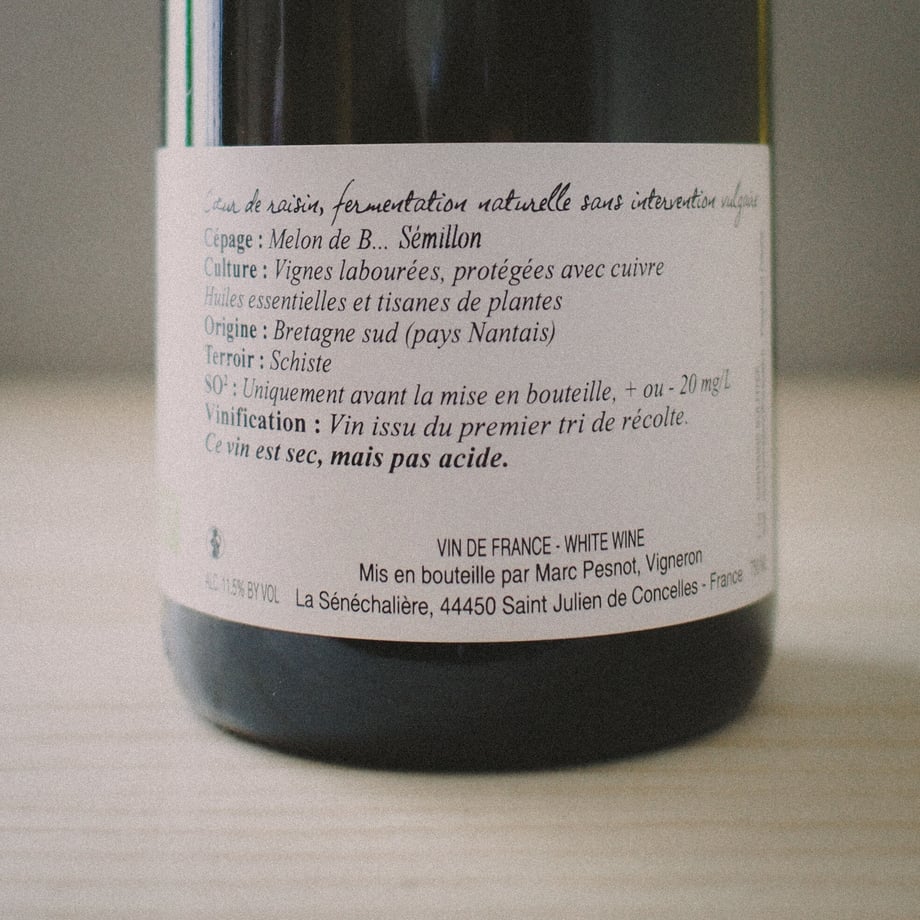
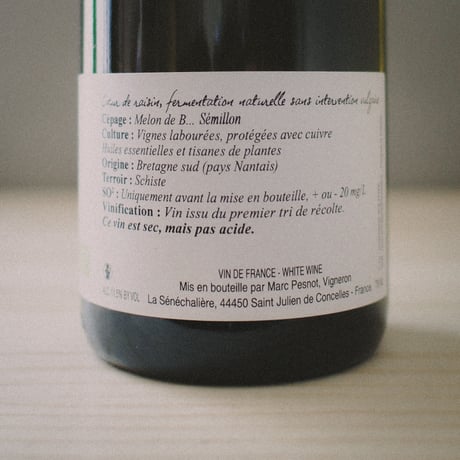
Sémillon (セミヨン) 70% - 買い葡萄 (ベルジュラックから買い付け)
Melon de Bourgogne (ムロン・ド・ブルゴーニュ) 30% - 自社畑葡萄
セミヨンは約30~40年、ムロン・ド・ブルゴーニュは3~4年の若木と30~40年の古木
Semillon about 30-40 years old, Moulon de Bourgogne 3-4 years old young vines and 30-40 years old vines
【タイプ type】白・すっきり辛口 white, light and dry
【製法】
低圧力による12時間の長時間の圧搾(ニュイタージュ)
セミヨン&ムロン・ド・ブルゴーニュ:約2ヵ月間、グラスファイバー製タンクで熟成。
セミヨンは1回(2021年11月初め)、ムロン・ド・ブルゴーニュは澱引きなし。
アッサンブラージュ後に清澄作業&軽いろ過をして瓶詰め。
Prolonged pressing at low pressure for 12 hours (nuiterage)
Semillon & Moulon de Bourgogne: aged in fiberglass tanks for about 2 months.
Semillon: once (beginning of November 2021); Moulon de Bourgogne: without racking.
After assemblage, the wine is bottled after fining and light filtration.
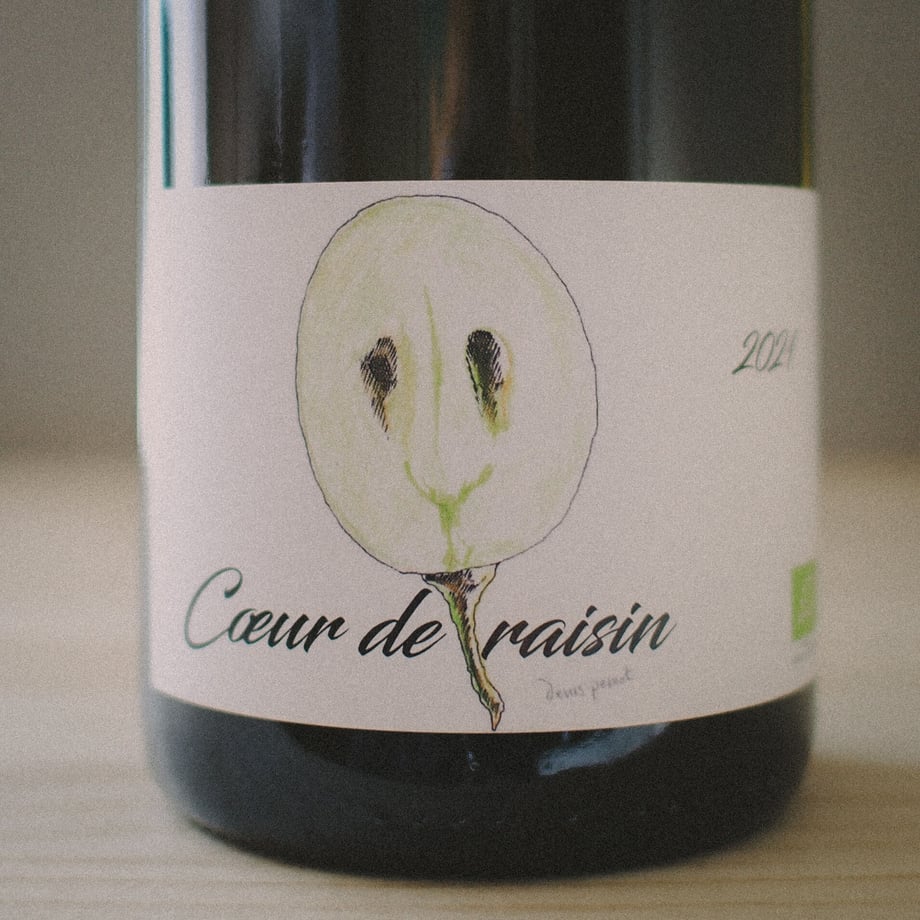
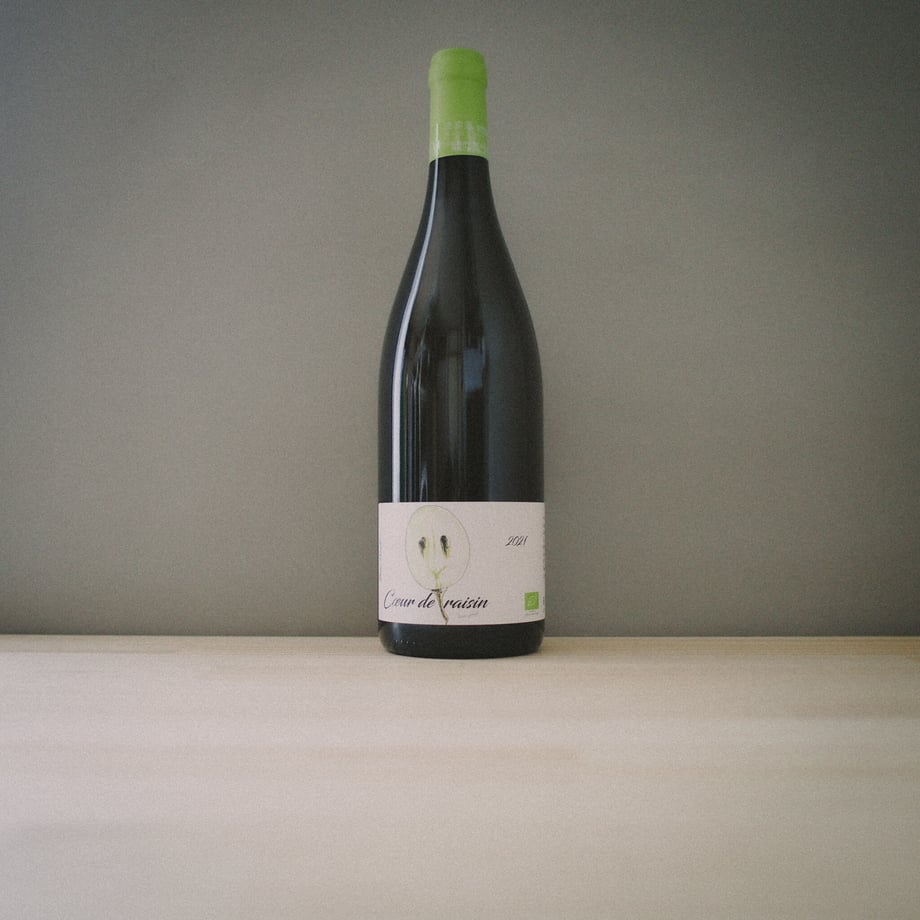
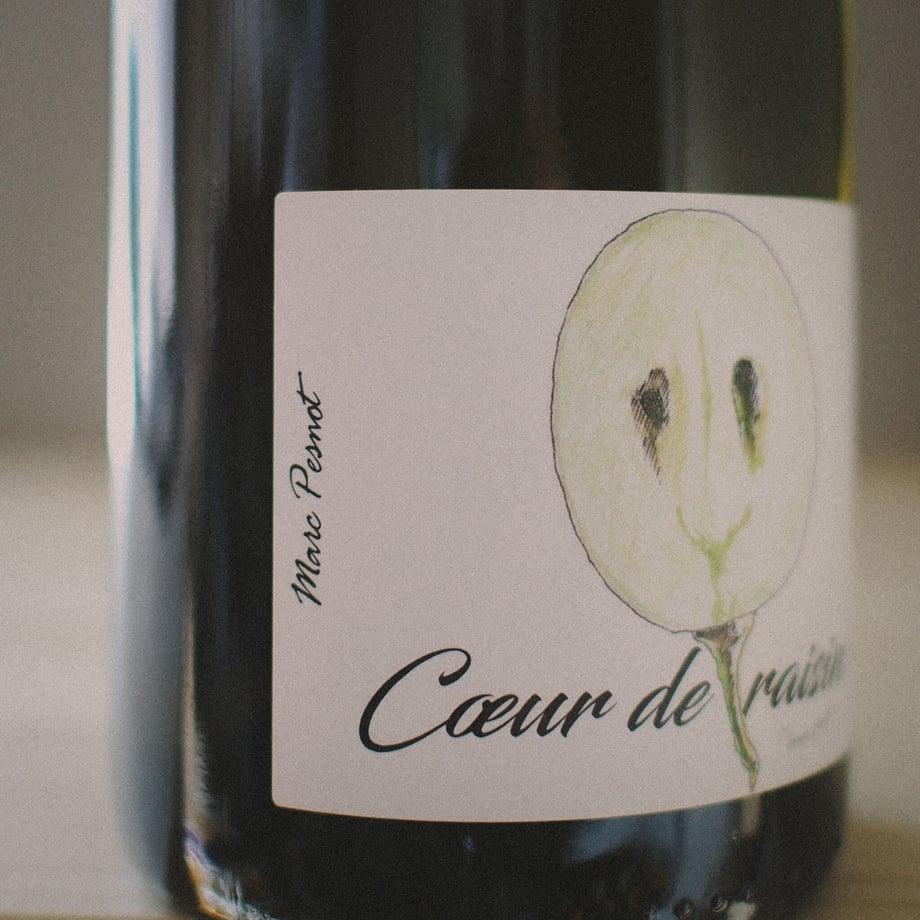
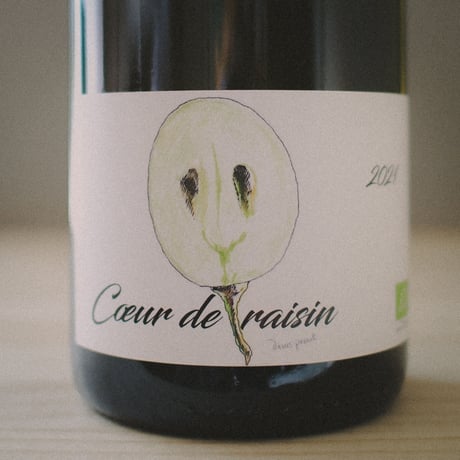
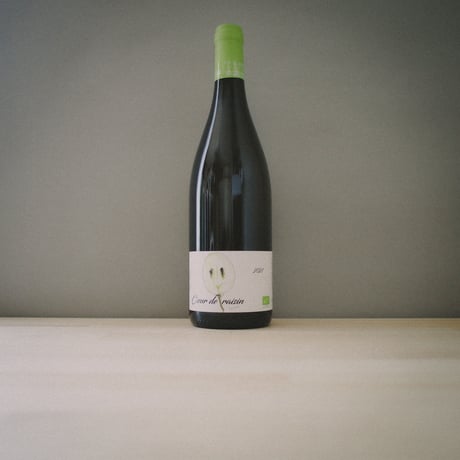
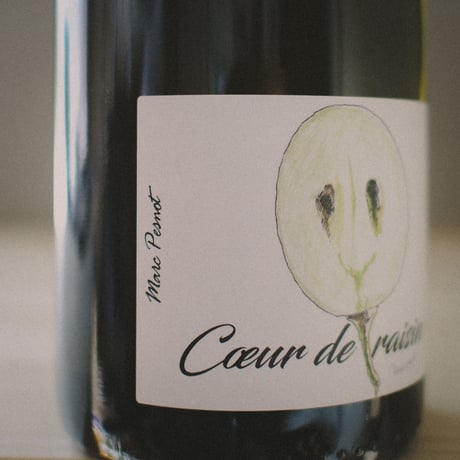
ワイン名は、「ブドウの中心、ブドウの心」という意味。9月に収穫、11月末にはビン詰めをした果実味にあふれたブドウそのままのワインであることから名付けられた。ラベルのデザインは、ペノ氏の弟のデザイン。
その年のワインを知るためのプリムール的な位置づけとなるキュヴェ。おそらく最初で最後となるのではないかと思われる、セミヨンとムロンがアッサンブラージュされた2021年。
The wine's name means "heart of the grape, heart of the grape," so named because the wine is made directly from the grapes, which are harvested in September and bottled at the end of November, full of fruitiness. The label was designed by Mr. Pesnot's brother.
This cuvée is positioned as a primer for getting to know the wines of the year. Probably the first and last, 2021 is an assemblage of Semillon and Muron.
Alc. 11.5%
\\from Importer インポーターコメント//
セミヨン種のシャープな酸とスパイスの風味、ムロン種の熟した洋梨やアニス、アーモンドプードルのようなニュアンスが折り重なり、軽快でカジュアルながらもふくよかな風味を備えたキャラクター。
The sharp acidity and spice flavors of the Semillon grape, layered with ripe pear, anise, and almond pudding-like nuances of the Muron grape, give this wine a light, casual, yet full-flavored character.
\\about Vigneron 生産者について//
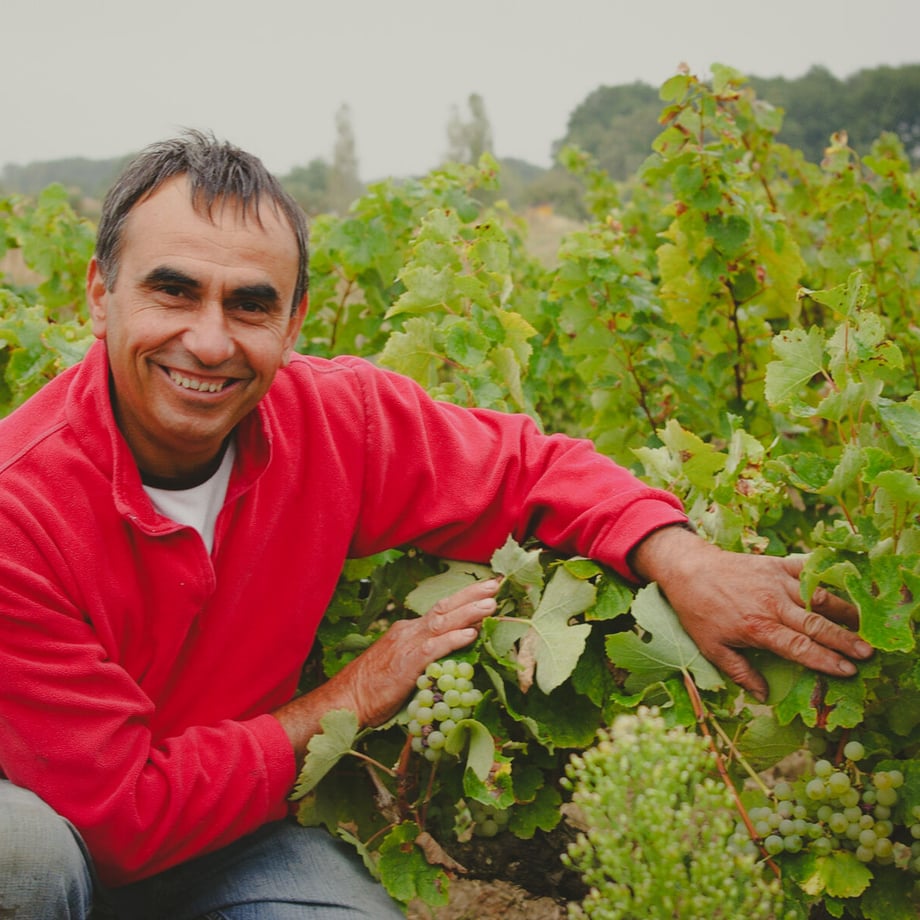
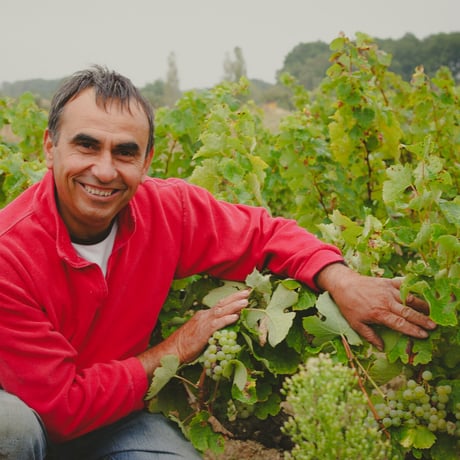
Marc Pesnot - Domaine de la SÉNÉCHALIÈRE
マルク・ペノ - ドメーヌ・ド・ラ・セネシャリエール
【歴史】
ペノ家は1890年頃から代々この地でワインを造り続けてきた。マルク・ペノ氏は、1980年からである。当時は通常通りAOCミュスカデを生産していた。
始めてまだ間もない頃、仲間の生産者たちと一緒に世界中の白ワインとミュスカデのワインを目隠しで飲み比べた。結果、自分たちの造るミュスカデの評価が最も低く、その味わいの酸っぱさ、薄っぺらさに驚愕した。
しかしペノ氏はこう思った。「この地で世界一美味しい白ワインを造ってやろう!」と。ここからペノ氏の挑戦が始まった。
当時ソムリエをしていた弟を介して、多くの生産者たちと出会った。中でもペノ氏に感銘を与えたのは、自然派ワインの先駆者たちであった。彼らから多くを学び、また自分でも実験と失敗を繰り返しながら独自の製法を開発し、自然なぶどうの旨味がたっぷり感じられるワインを造るようになっていった。
その一方で、一般的なAOCミュスカデのワインとの違いは年々大きくなり、やがて官能検査で「ミュスカデらしくない」と判断されるようになった。旨味があり過ぎるのだ。それ以来ペノ氏はAOCを捨て、Vin de Table(テーブルワイン)というカテゴリーで、本物のワインを行っている。
【地理・気候】
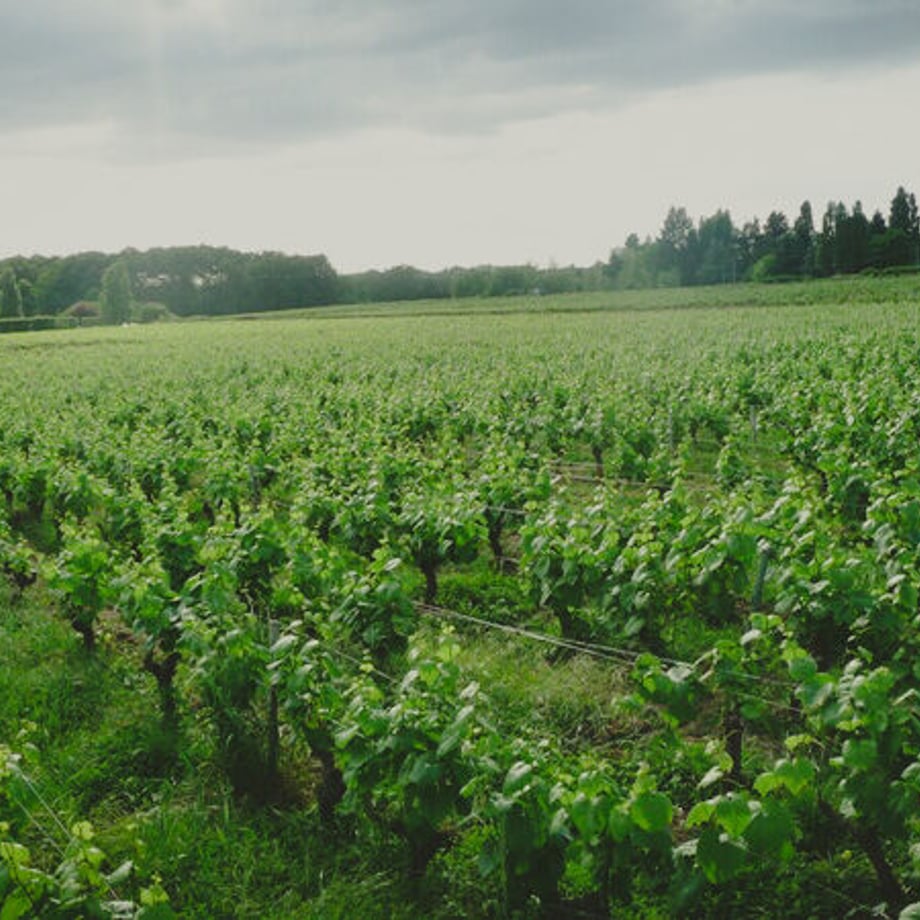
フランスの北西部を流れるロワール河の下流、ナントという街の周辺に位置する。ロワール河の支流である「セーヴル川」と「メーヌ川」が合流する流域の産地で、「Muscadet de Sèvre-et-Maine sur Lie(ミュスカデ・ド・セーヴル・エ・メーヌ・シュール・リー)」というように、河川名がAOCに使われている。
大西洋の影響を受ける海洋性気候で、冬の寒さは穏やかで、夏は乾燥した気候となる。ミュスカデ地区は北にロワール河、南にセーヴル川とメーヌ川が流れており、この地区特有の気流によって、雷雨が発生しにくいミクロクリマ(微気候)となっている。
【土壌】
砂利や岩が多く、片板岩(シスト)を含んだ土壌。フランスは大部分が石灰質土壌であるのに対し、このシスト土壌は非常に珍しい。ここで育つブドウは、ミネラル豊富で酸味の強いワインになる。
0.5haの畑でぶどう一株一株の回りに牡蠣の貝殻を粉末状にしたものを撒き、土地のエネルギーを高めるという、ペノ氏独自の試みを行なっている。目的は①土壌の酸度を下げて地中の栄養分の吸収を促進させる②白い粉末による日差しの反射を生かした日照量の増大及び表土の温度上昇による熟成度のアップ③ビオディナミの方法に見られるイラクサやヒレハリソウの煎じ薬を噴霧するのと同じ目的で、牡蠣の貝殻の粉末が土壌のエネルギーを強くする、等である。海底でワインを熟成させたこともあるペノ氏は、飽くなき挑戦を日々続けている。
【栽培】
雨の多い産地という非常に難しい条件の中、農薬や化学肥料を一切使わない有機栽培を実践し、畑の微生物を死滅させることなく、生命力のある生きた土壌を保っている。(エコセール申請中)
その土壌にしっかり根を張った樹齢の古い樹を非常に大切にしている。そしてその根が地中深くから吸い上げてくるミネラルや養分を、1つ1つの粒に出来る限り凝縮させるため、収穫量を極端に落としている。
またペノ氏は、失われつつある品種「アブリュー」を使って、驚くばかりの上質な赤ワインを造っている。
【収穫】
ミュスカデ地区では、採算の都合上、90%の蔵が機械摘みする中、ここでは健全な果実のみを選び、全て手摘みで行う。その上、株や房によって熟度に差がある年には2度に分けて収穫するという徹底ぶり。また運搬には小さな箱を用い、ぶどうの重みで粒がつぶれないよう気を遣っている。
収穫時にSO2(亜硫酸)は添加しない。培養酵母も添加せず、天然酵母の活動により、自然に醗酵が始まる。
【醸造】
独自の醸造法:「ニュイタージュ」の紹介
ペノ氏は、「ワインのオートクチュール」と呼んでいるセネシャリエール独特の醸造方法「ニュイタージュ」により、品種の個性を生かした香り高く豊かなコクのあるミュスカデ造りを目指している。
ナント地区ではまだ誰も取り組んでいない「ニュイタージュ」は、醸造を始めると夜中も醗酵槽につきっきりとなる大変な重労働(ニュイタージュはフランス語のニュイ=夜中 からペノ氏が造った言葉)で、ワイン造りに全力を尽くすペノ氏だからできる、今後が注目される方法である。
ペノ氏は、良いワイン造りはまず丹念に、そして素早く厳選したぶどうが必要だと考え、果汁が空気に触れて香りを失わないよう、収穫したぶどうをプラスティックケースに入れて潰れないよう注意しながら運搬する。次に葡萄を除梗せずに丸ごと醗酵槽に入れ、ドライアイスを入れて温度を5℃位にする。温度は最終的に12℃前後に維持し、炭酸ガスによって空気との接触を遮断した状態を6~7時間保つ。するとぶどう粒の細胞内でゆっくりと還元的醗酵(酸素が無い条件の元で起こる醗酵、本人は「フェルマンタシオン・アロマティック」と命名)が始まる。
この処置をすることによって、
1)葡萄皮の裏にあるポリフェノールが無理無く抽出され、香りと旨味が最大限に表現される
2)低温でしか活動しない数種類の自然酵母が、短期間に入れ替わりで醗酵活動する
という効果が挙げられる。
6~7時間後、真夜中の3時頃に手作業にて(金属もポンプも使用せず)葡萄を取り出してプレスにかける。1回目と2回目のジュースのみをタンクに入れて20時間の清澄作用を行なう。次に醗酵槽に移して17~18℃で低温自然醗酵を行なう。この時酵母菌は全て自然酵母のみで、亜硫酸も一切添加しない。腐敗果が混ざっていないからこそ、亜硫酸無添加で醸造ができるのである。
[History]
The Pesnot family has been making wine in the region for generations since about 1890. Marc has been in the business since 1980. At that time, they were producing AOC Muscadet as usual.
In the early days, he and his fellow producers blindfolded and compared white and Muscadet wines from around the world. The result was that their Muscadet was the lowest rated, and they were astonished at how sour and thin it tasted.
But he thought, "This is a great wine. I will make the best white wine in the world here! And so it was. This is where his challenge began.
Through his brother, who was a sommelier at the time, he met many producers. Among those who impressed him the most were the pioneers of natural wine. He learned a lot from them, and through repeated experiments and failures, he developed his own unique method and began to produce wines with a rich natural grape flavor.
However, the difference between their wines and those of the average AOC Muscadet wines became greater and greater over the years, and eventually the wines were judged "not Muscadet-like" by the sensory test. It had too much flavor. Since then, he has abandoned the AOC and now makes real wines under the category of Vin de Table (table wine).
[Geography and Climate]
It is located in the lower reaches of the Loire River, which flows through northwestern France, around the city of Nantes. The region is located in the basin where the "Sèvre" and "Maine" rivers, which are tributaries of the Loire, converge, and is known as "Muscadet de Sèvre-et-Maine sur Lie" (Muscadet de Sèvre-et-Maine sur Lie). The name of the river is used for the AOC, as in "Maine-sur-Lee.
The climate is maritime, influenced by the Atlantic Ocean, with mild winters and dry summers. The Muscadet area is bordered by the Loire River to the north and the Sèvres and Maine Rivers to the south, and the area's unique air currents create a microclimate that prevents thunderstorms from occurring.
[Soil]
The soil is rich in gravel and rock and contains schist. These schist soils are very rare in France, whereas most of the soils are calcareous. Grapes grown here produce wines that are rich in minerals and high in acidity.
Mr. Pésnot's original experiment is to sprinkle powdered oyster shells around each grapevine in a 0.5 ha vineyard to increase the energy of the land.
The purpose is
(1) to reduce the acidity of the soil and promote the absorption of nutrients from the soil,
(2) to increase the amount of sunlight by taking advantage of the reflection of sunlight from the white powder and to increase the ripening rate by raising the temperature of the topsoil, and
(3) to strengthen the soil by the powder of oyster shells with the same purpose as spraying nettle and Chinese hibiscus decoction as in the biodynamic method. It strengthens the energy, etc. Mr. Pesnot, who has also aged wine on the ocean floor, is relentlessly challenging himself day in and day out.
[Cultivation]
Despite the extremely difficult conditions of the region's rainy climate, they practice organic cultivation without the use of any pesticides or chemical fertilizers, keeping the soil vital and alive without killing the microorganisms in the vineyard. (Eco-sale application pending)
They take very good care of old trees that are firmly rooted in this soil. In order to concentrate as much of the minerals and nutrients that the roots suck up from deep within the earth as possible in each individual grape, the harvest is kept extremely low.
He also uses a dying variety, Abreu, to make a surprisingly fine red wine.
[Harvesting]
While 90% of the wineries in the Muscadet area pick fruit by machine for financial reasons, here only healthy fruit is selected and all fruit is picked by hand. In years when the ripeness varies from plant to plant and from bunch to bunch, the fruit is harvested in two separate harvests. In addition, small boxes are used for transportation to prevent the grapes from being crushed by the weight of the grapes.
No SO2 (sulfurous acid) is added during harvest. Fermentation begins spontaneously with the activity of natural yeast.
[Vinification]
Unique vinification method: "Nuitage"
He aims to produce an aromatic, rich, full-bodied Muscadet that brings out the character of the grape variety through "nuitage," a vinification method unique to Seneschaliere that he calls "the haute couture of wines.
"Nuitage," which no one else in the Nantes area has yet tried, is a method that is attracting attention in the future because it is possible only with his full commitment to winemaking, which requires him to stay at the fermentation tanks all night long once vinification begins.
He believes that good winemaking first requires carefully and quickly selected grapes, so he transports the harvested grapes in plastic cases, being careful not to crush them, so that the juice does not lose its aroma when exposed to the air.
Next, the grapes are placed whole without destemming into the fermentation tanks, and dry ice is added to keep the temperature at about 5°C (41°F). The temperature is finally maintained at around 12°C (54°F) and the grapes are kept in contact with the air by carbon dioxide gas for 6 to 7 hours. Then, reductive fermentation (fermentation that occurs in the absence of oxygen, which he named "fermantation aromatique") begins slowly in the grape grains' cells.
This treatment allows
(1) Polyphenols in the back of the grape skins are extracted without difficulty, and aroma and flavor are expressed to the maximum extent.
(2) Several types of natural yeasts, which are only active at low temperatures, are able to replace each other in a short period of time for fermentation activity.
This is one of the most important effects of this method.
After 6-7 hours, around 3:00 a.m., the grapes are removed by hand (without metal or pump) and pressed; only the first and second juice is placed in tank for 20 hours of clarification. The grapes are then transferred to fermentation tanks for cold spontaneous fermentation at 17-18°C (63-68°F). All yeasts are natural yeasts and no sulfites are added. Because there is no rotten fruit in the wine, it can be vinified without adding sulfites.
その他のアイテム
-
- ラディコン "ポップ ビアンコ" | Radikon "Pop Bianco" 2025
- ¥4,180
-
- アドリアン・ブリソー "ブルイィ・レ・ビュイドン" | Hadrien Brissaud "Brouilly Les Buidons" 2024
- ¥8,580
-
- ブルノ・デュシェン "オダン" | Bruno Duchene "Odin" 2025
- ¥6,600
-
- アドリアン・ブリソー Hadrien Brissaud "Santenay 1er Cru Le Petit Clos Rousseau" 2024
- ¥24,200
-
- ドメーヌ・ド・ラ・レジェルテ "レ・フォリー" | DOMAINE DE LA LÉGÈRETÉ "LES FOLIES" 2024
- ¥4,620
-
- アドリアン・ブリソー "アリゴテ・キュヴェ・オーギュスト" | Hadrien Brissaud "Aligoté Cuvée Auguste" 2024
- ¥8,580