20歳未満の飲酒は法律で禁止されています
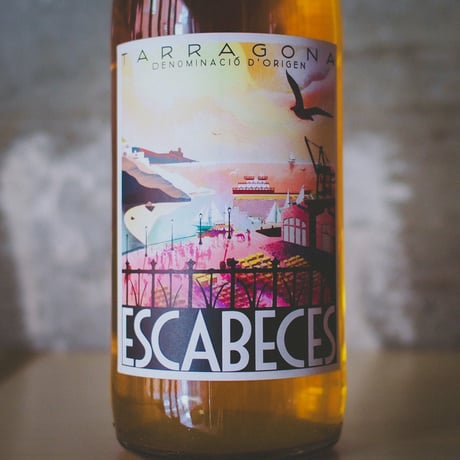
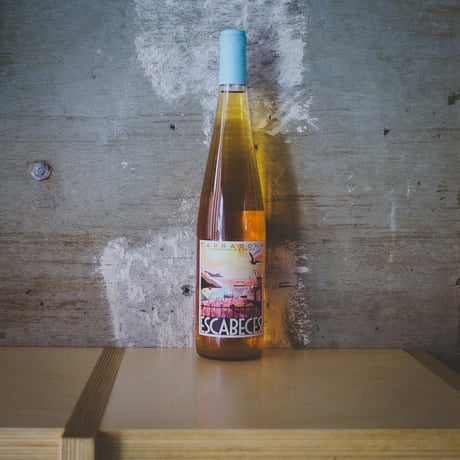
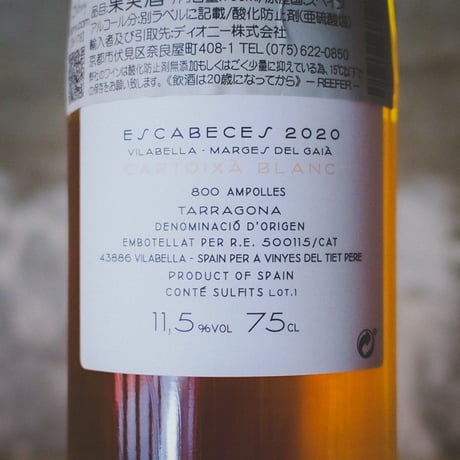
【内容量 Net】750ml
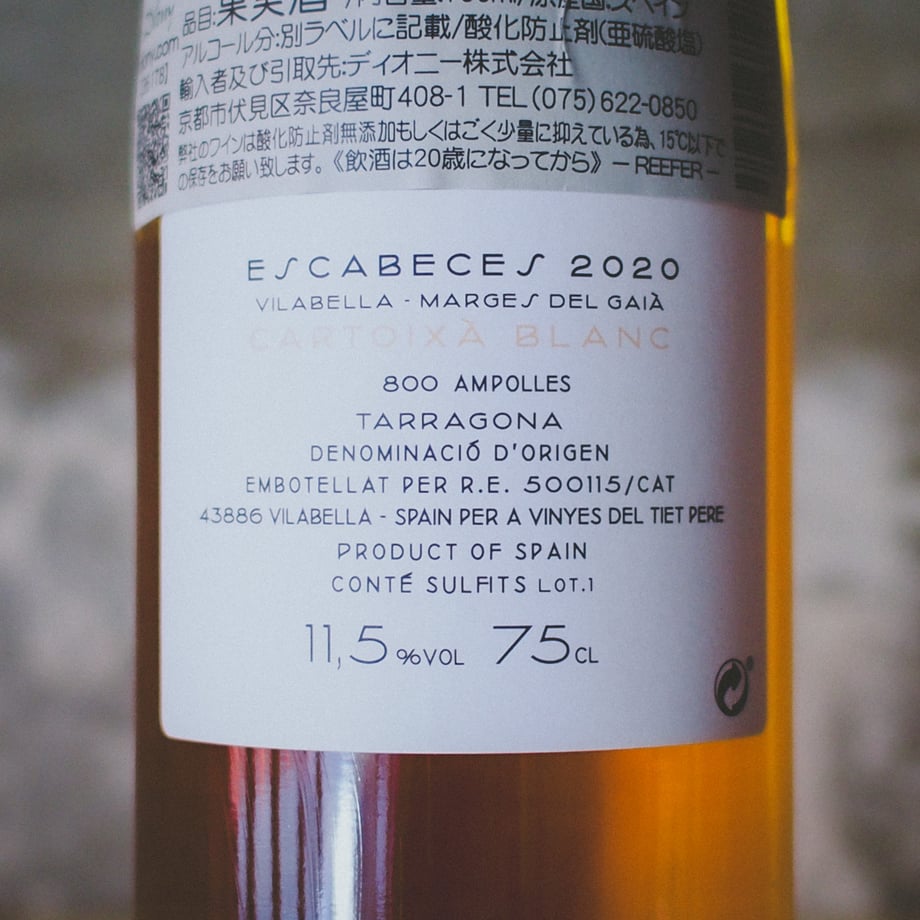
【産地 region】Spain スペイン Cataluna カタルーニャ
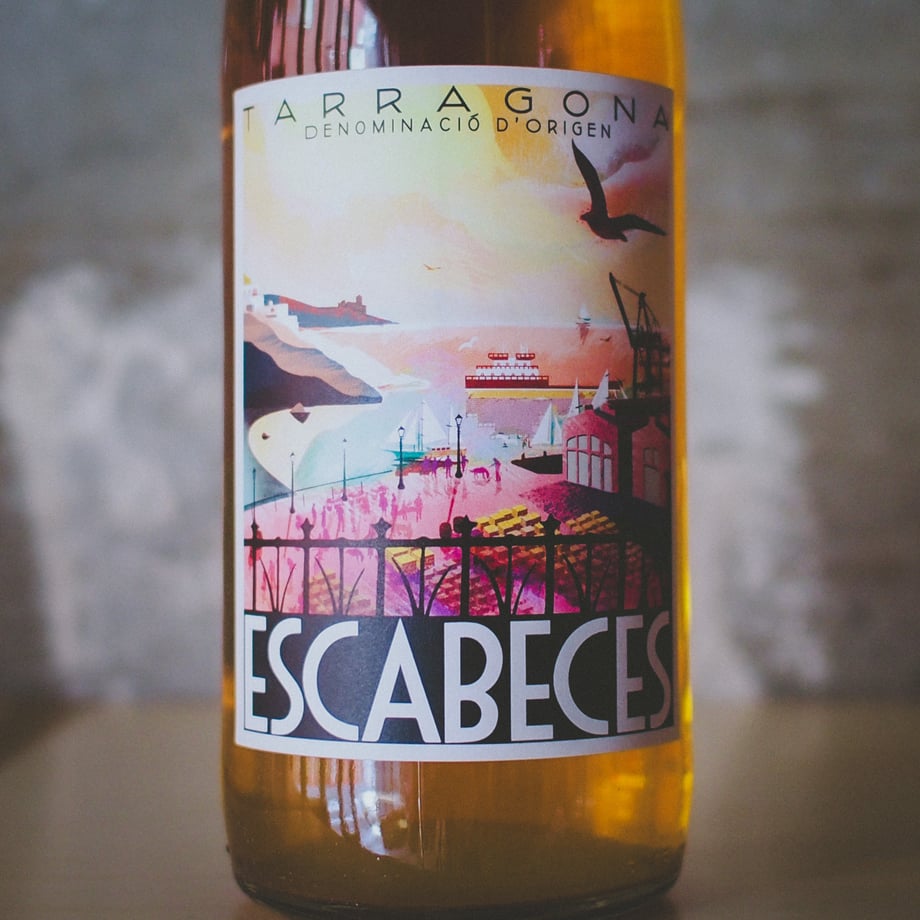
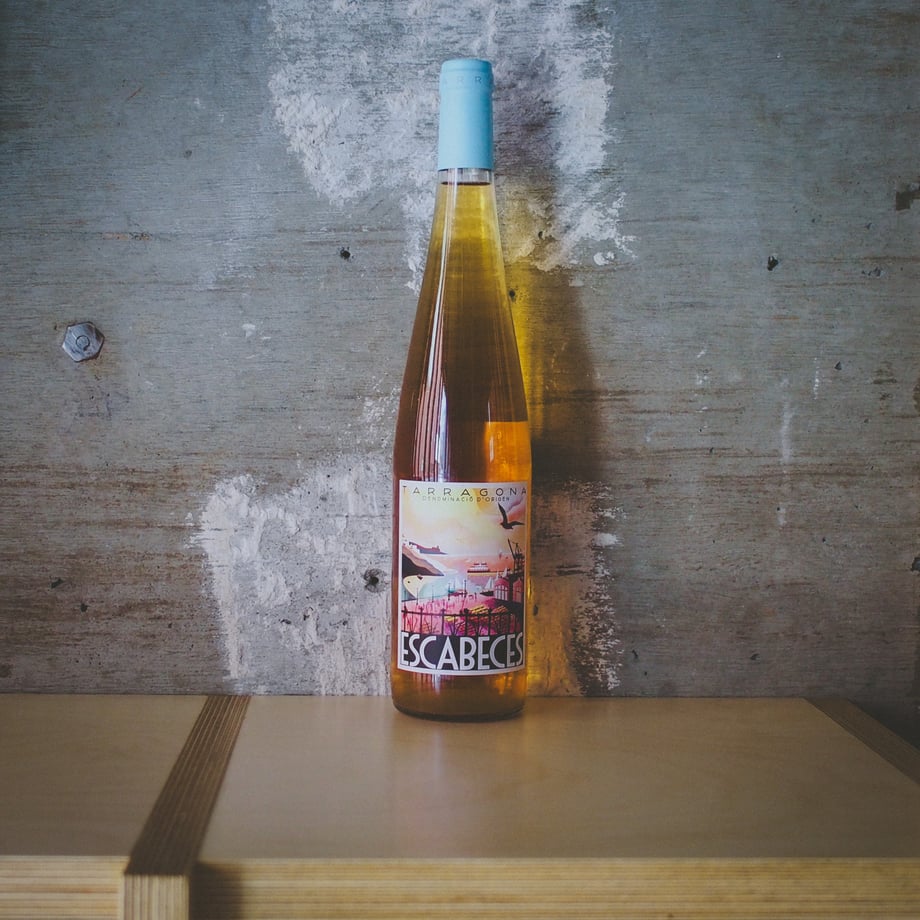
【品種 variety】 カルトゥシャ Cartoixa (チャレッロ Xarel-lo) 100% (手摘み/平均62年 Hand-picked Ave. 62 yrs old)
【タイプ type】オレンジ Orange
【醸造 Vinification】
除梗後、ステンレスタンクで4日間醸し
水平式圧搾/ステンレスタンクで22日間発酵
300Lの古樽で6 ヶ月熟成
濾過あり・清澄あり
After destemming, the wine is vinified in stainless steel tanks for 4 days.
Horizontal pressing/fermentation in stainless steel tanks for 22 days.
Aged for 6 months in 300 litre old oak barrels.
Filtration and fining
\\from Importer インポーターコメント//
20年は春先に連続的な降雨があり、ミルデューの被害が多い年でしたが、この区画に限り被害をあまり受けませんでした。
カルトゥシャ(チャレッロ)を除梗後4日間醸し後プレスし発酵、古樽で熟成 しました。
透明感あるクリアな黄金色、金木犀やマンゴー、アプリコット、エスニックな香り、クリアな味わいは色調よりもシャープな味わいでほんのりとした樽香やわずかなタンニンが感じられます。
The year 20 was a year of continuous rainfall in early spring, which caused a lot of damage to the Mildew, but only this parcel did not suffer much damage.
The Carthusian (charrello) grapes were destemmed, vinified for four days, pressed and fermented, then matured in old oak barrels.
The wine has a clear, transparent golden colour, with aromas of golden osmanthus, mango, apricot and ethnic notes, and a clear palate that is sharper than its colour, with a hint of oak and slight tannins.
\\about Viticultor 生産者について//
Alterovinum アルテロヴィヌム
スペイン カタルーニャ
カタルーニャのガルナッチャ(白・赤)を日々の喜びにしたい!
生産者Oriol Perez de Tudela(ウリオル・ペレス・トゥデラ)は、カタルーニャ州タラゴナ県北西部、ビラべリャ村の出身です。(バルセロナから車で1時間半ほど南下。ペネデスとコンカ・デ・バルベラのちょうど中間程です。)
小さい頃の思い出といえば、叔父の畑を走り回っていた事というほどで、小さい頃からブドウ栽培に親しんできました。この地域では今でもコーペラティブの影響力が強く、収穫されたブドウは主にコーペラティブに売られます。(コーペラティブに売らないと”非国民”と呼ばれる、という老人もいるほどです。)
土地が広く気候の安定したタラゴナ県(及びスペイン全土)のブドウの価格は下落する一方で、ワインで生計を立てるつもりのなかったウリオルは、大学では哲学を学び小さな新聞社に就職。ジャーナリストとしてキャリアをスタートさせます。ところが、スペインバブル崩壊の影響から不況が続き、新聞社からは給料未払いが続いたため退職。その後外資の電気通信会社の営業職に再就職します。毎日サンプルを担ぎながら顧客訪問す日々。お金のために、好きでもない通信機器を売る生活は、経済的には安定していましたが、精神的にはそれまでで一番辛かったとウリオルは語ります。
2000年にウリオルの人生を変える2つの出来事が訪れます。1つ目は、ワイン産地プリオラートの変身です。プリオラートは、ウリオルの生まれた村から車で1時間 ほどと比較的近くに位置します。当時プリオラートは、過疎の進んだ古い村として知られていました。人手がなく、除草剤に汚染された古いブドウ畑が、厳しい傾斜に点在するだけの村でした。それまで濃厚、アルコール度の高いどっしりとした粗野なワイン造りを行なってきたプリオラートに(当時はフランスワイン のアルコール度と色付けのために、主にフランスに輸出されていました)、リオハ出身で自分のワインを造るための新天地を探していたアルバロ・パラシ オス、スペイン市民戦争後に自分の土地と名前が奪われた為に新しい土地とセラーを探していたレネ・バルビエールを代表とする4人組が到着し、ワイン造りを始めます。樹齢の高いブドウ樹から収穫された凝縮感のある果実を、フランスで学んだ醸造方法で醸したワインは、米国ワイン・アドヴォケイト誌で高得点を獲得します。国際的に注目を浴びたこの産地は、スペインワイン業界の強力な追い風となり、技術の発展・投資に大きく貢献します。
2つ目は彼の息子の言葉でした。当時まだ幼稚園くらいの小さな息子が、”パパのお仕事なに?”と聞いてきたそうです。この何気ない質問に、ウリオルは返す言葉が無かったと言います。誇りを持って息子に話すことのできない仕事をこなす自分。自分に正直になれない事。この気持ちが心の中で大きくなるのを感じ、本当に自分が好きな事は何かを模索し始めます。そしてたどり着いたのは、自分が生まれた土地に寄り添った生き方、つまり小さい頃の思い出「畑を楽しく走り回る自分の姿」でした。
生命を感じることのない機械やシステムから離れ、自分の生まれた土地ともう一度繋がること。 そしてプリオラートの変化を目撃し、これから湧き起こるスペインワイン業界の潮流に乗りたい。自分の気持ちに気が付くといてもたってもいられなくなり、 当時上り調子のプリオラートと、当時まだ無名だったガルナッチャの宝庫テラ・アルタにワイン造りを学ぶため通い詰めたそうです。
プリオラートやテラ・アルタでワイン造りを学ぶ中で、ウリオルが気づいたことがあります。スペインワインが世界から注目を集め始める反面、スペインの人々の食卓からワインが消え始めていた事です。70年代、スペイン人1人当たりのワイン年間消費量は80Lでした。それが80年代には60Lになり、90 年代にはその半分の40Lに減少。2005年には25Lまで落ち込み、現在は個人のワイン年間消費量は10~15L程と言われています。
スペインの大衆的なレストランやバル、自宅で飲むワインは、いまだに”グラネル”と呼ばれるバルクワインが一般的です。近くのワインショップにペットボトルや空き瓶を持参し、大きな樽やタンクからワインを移します。
レストランではランチメニューの値段にワインが既に含まれており、ボトルがテーブルに置かれ、好みによってソーダで割って飲みます。ワイナリーやコーペラティブの中には、訪問客にタンクから直売しているところもあります。この消費形態が“かっこよくない”、”ワ インがおいしくない”という理由で減少しており、年間消費量の減少へも繋がっています。
ワインの人気を取り戻すためには、フォーマットやデザイン、コミュニケーション方法を変える必要があるとウリオルは考えています。ペットボトルに廉価な地ワインを入れるのではなく、個性のあるワインを厳選し、スタ イリッシュなデザインのバッグインボックスに入れることで、若い消費者の注目を集めやすくする。バッグインボックスには、品質も保持しやすいという利点も あります。また、ペットボトルやリサイクルボトルではなく、パッケージングし、商品名をつけることでブランドとして確立させること。 これらの点が、ウリオルのプロジェクト“El Vi a Punt(エル・ヴィア・プン)”の出発点でした。
750mlボトルのワイン名“CIUTATS(シウタッツ)”は、“CITY” を意味し、ガルナッチャは昔から町の人々に愛飲され続けていることからこのネーミングになっています。
BIBのワイン名SINE(シーネ)は、ラテン語のフレーズ”SINE QUA NON(シーネ・クア・ノン/それがなければ成り立たないもの)”に由来しています。共にスペインの生活・食卓になくてはならいものであったワインを再び身近に感じて欲しいという気持ちが込められています。
ウリオルはDOタラゴナに自社ブドウ畑ももち自家栽培・自家醸造のワインも作っています。畑はビオ、醸造もナチュラルワインのそれです。 エル・ヴィア・プン・シリーズの750mlボトルのCIUTATS、BIB(3L)のSINEの白ワインと赤ワインは彼がコンサルタントとして入りプロデュースしている、いわゆるネゴシアンのカテゴリーです。
Catalan Garnacha (white and red) is a daily pleasure!
Producer Oriol Perez de Tudela hails from the village of Vilavelha, north-west of the province of Tarragona, Catalonia. (It is about an hour and a half drive south of Barcelona. It is just about halfway between Penedès and Conca de Barbera).
I have been involved in viticulture from a very young age, with my earliest memories being running around my uncle's vineyards. The region is still strongly influenced by the corporative sector, and the harvested grapes are mainly sold to the corporative sector. (Some old people say that if they do not sell to the corporativists, they are called 'unpatriotic'.)
The price of grapes in Tarragona (and throughout Spain), where the land is large and the climate stable, is falling, and Oriol, who had no intention of making a living from wine, studied philosophy at university and worked for a small newspaper. He started his career as a journalist. However, he left the newspaper due to the continuing recession caused by the bursting of the Spanish bubble, and his salary was unpaid by the newspaper. She then re-employed in sales for a foreign telecommunications company. He spent his days carrying samples and visiting customers every day. Selling telecommunications equipment he didn't like for money was financially stable, but mentally it was the hardest thing he had ever done, according to Oriol.
In 2000, two life-changing events occurred for Uliol: first, the transformation of the wine-growing region of Priorat. Priorat is located relatively close to the village of Oriol's birth, about an hour's drive away. At the time, Priorat was known as an old, depopulated village. It was a village of old, herbicide-contaminated vineyards scattered across the steep slopes. Priorat, which until then had been making dense, alcoholic, robust, rough wines (at the time mainly exported to France for their alcohol content and colouring), had Alvaro Palacios, a native of Rioja, looking for a new place to make his own wines, The quartet, represented by Rene Barbiere, who was looking for new land and a cellar after his land and name were taken from him following the Spanish Civil War, arrived and began making wine. Their wines, made from concentrated fruit from old vines and vinified using methods learnt in France, received high scores in the US Wine Advocate magazine. The international attention the region has received is a powerful tailwind for the Spanish wine industry, contributing significantly to technological development and investment.
The second was his son's words. His little son, who was only in kindergarten at the time, asked him, "What do you do, Daddy?" He asked. Uriol says he had no words to reply to this casual question. He was proud of himself for doing a job that he couldn't tell his son about. Not being able to be honest with himself. He felt this feeling growing in his heart and began to search for what he really loved to do. What he arrived at was a way of life that was close to the land where he was born - a memory from his childhood of himself happily running around in the fields.
To leave the lifeless machines and systems and reconnect with the land of my birth. And to witness the changes in Priorat and to ride the tide of the Spanish wine industry that is about to spring up. Once he realised how he felt, he couldn't stay away and went to Priorat, which was on the rise, and Terra Alta, a treasure trove of Garnacha, which was still unknown at the time, to learn about winemaking.
While studying winemaking in Priorat and Terra Alta, Oriol realised something. In the 1970s, the annual per capita consumption of wine in Spain was 80 litres. By 2005, it had dropped to 25 litres, and today the annual consumption of wine per person is estimated to be around 10-15 litres.
Bulk wine, known as 'granelles', is still the most common type of wine consumed in popular restaurants, bars and at home in Spain. People bring plastic bottles or empty bottles to their local wine shop and transfer the wine from large barrels or tanks.
In restaurants, wine is already included in the price of the lunch menu and bottles are placed on the table and drunk with soda, depending on preference. Some wineries and cooperatives sell wine directly from the tank to visitors. This consumption practice is declining because it is "not cool" and "wine doesn't taste good", leading to a decline in annual consumption.
To regain wine's popularity, Uriol believes that the format, design and communication methods need to change. Instead of filling plastic bottles with inexpensive local wines, select wines with character and put them in a stylishly designed bag-in-box to help attract the attention of younger consumers. Bag-in-boxes also have the added advantage that quality is easier to preserve. It should also be established as a brand by packaging it and giving it a product name, rather than a plastic or recycled bottle. These were the starting points for the Uriol project "El Vi a Punt".
The name of the wine in 750 ml bottles, "CIUTATS", means "CITY" and is a reference to the fact that Garnacha has always been a favourite of the townspeople. The name is derived from the fact that Garnacha has been drunk by the people of the town for centuries.
The wine name SINE for BIB comes from the Latin phrase "SINE QUA NON" (what it wouldn't be without it). It expresses the desire to bring wine, which has been an essential part of Spanish life and dining, back into familiarity.
Uriol also has its own vineyard in DO Tarragona, where it grows and makes its own wine. The vineyard is bio-based and the vinification is that of natural wine. The CIUTATS wines in 750 ml bottles and the SINE white and red wines in BIB (3 litres) from the El Via Pún series are produced by Uriol as a consultant, in the so-called negociant category.
その他のアイテム
-
- エミーワインズ シャルドネ 'made for each other 2025 | Emme Wines Chardonnay 2025
- ¥5,720
-
- ブルノ・デュシェン "シニエット" | Bruno Duchene "Chignette" 2025
- ¥6,600
-
- ローラン・バーンワルト "リースリング・ナチュール" | Laurent Bannwarth "Riesling nature" 2024
- ¥5,940
-
- ルイ・ジュリアン "ブラン" | Louis Julian "Blanc" NV25
- ¥3,025
-

- ラブセッラ "ラブセッラ・ソーヴィニョン・ブラン" 2021 | Rabusella "Rabusella Sauvignon Blanc" 2021
- ¥8,140
-
- ブルノ・デュシェン "キタ" | Bruno Duchene "KITA" 2025
- ¥7,700