
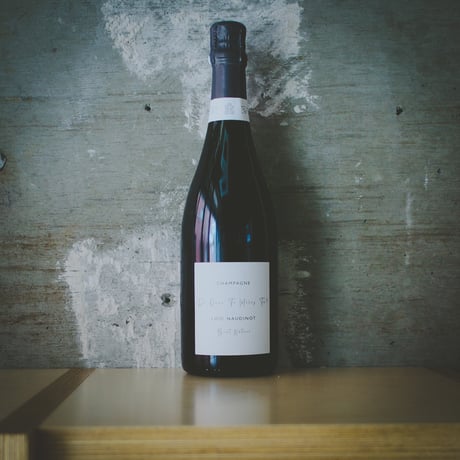
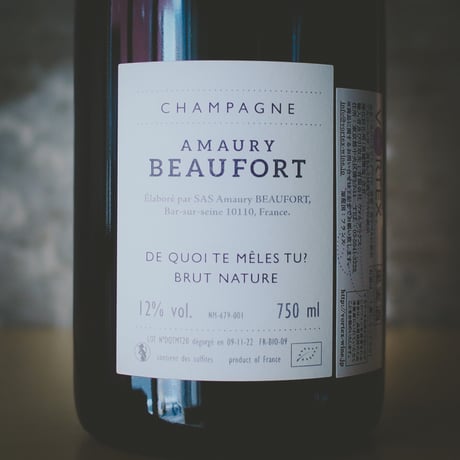
20歳未満の飲酒は法律で禁止されています
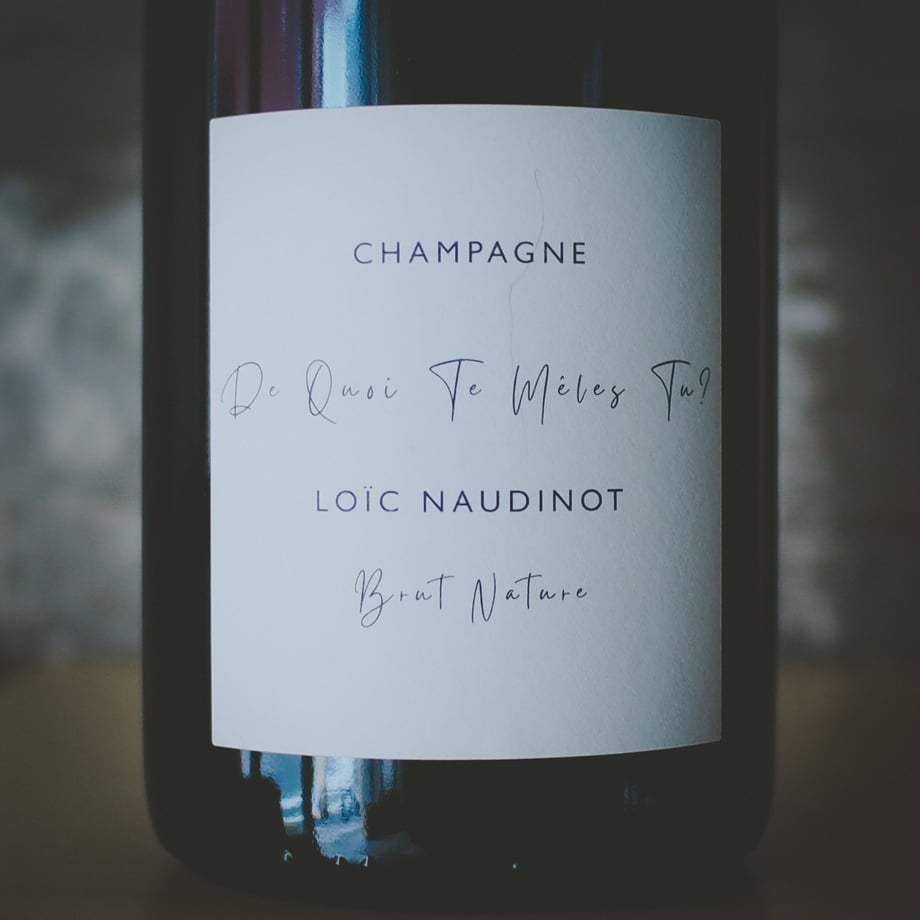
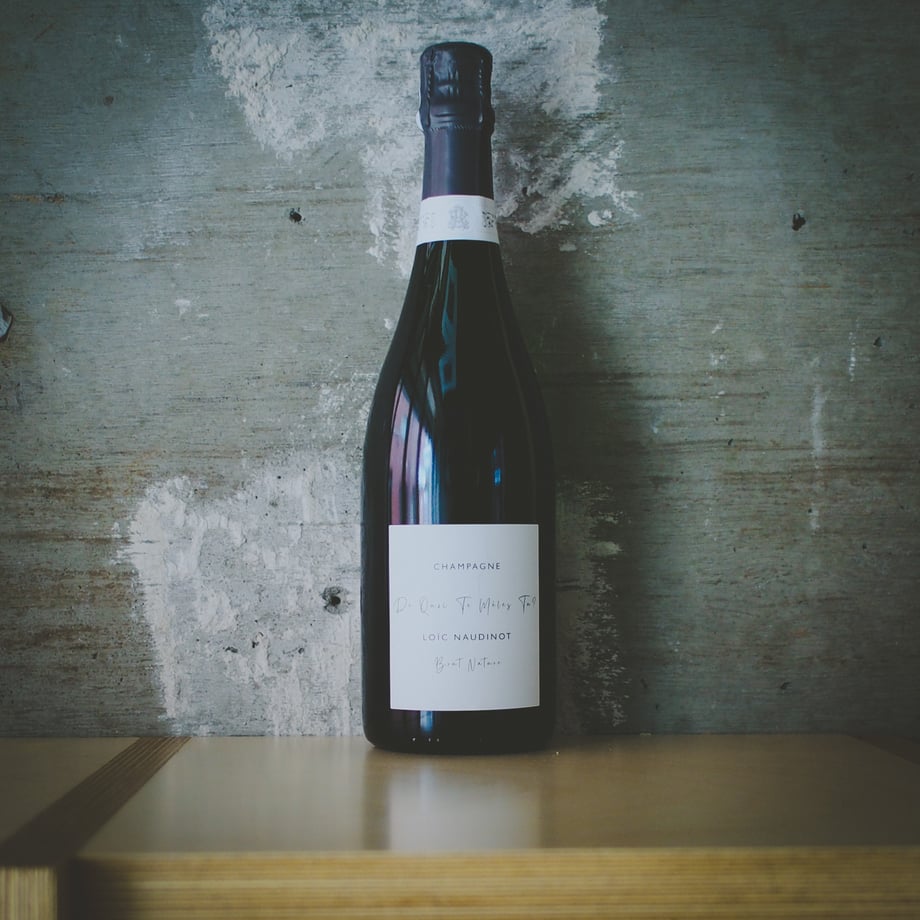
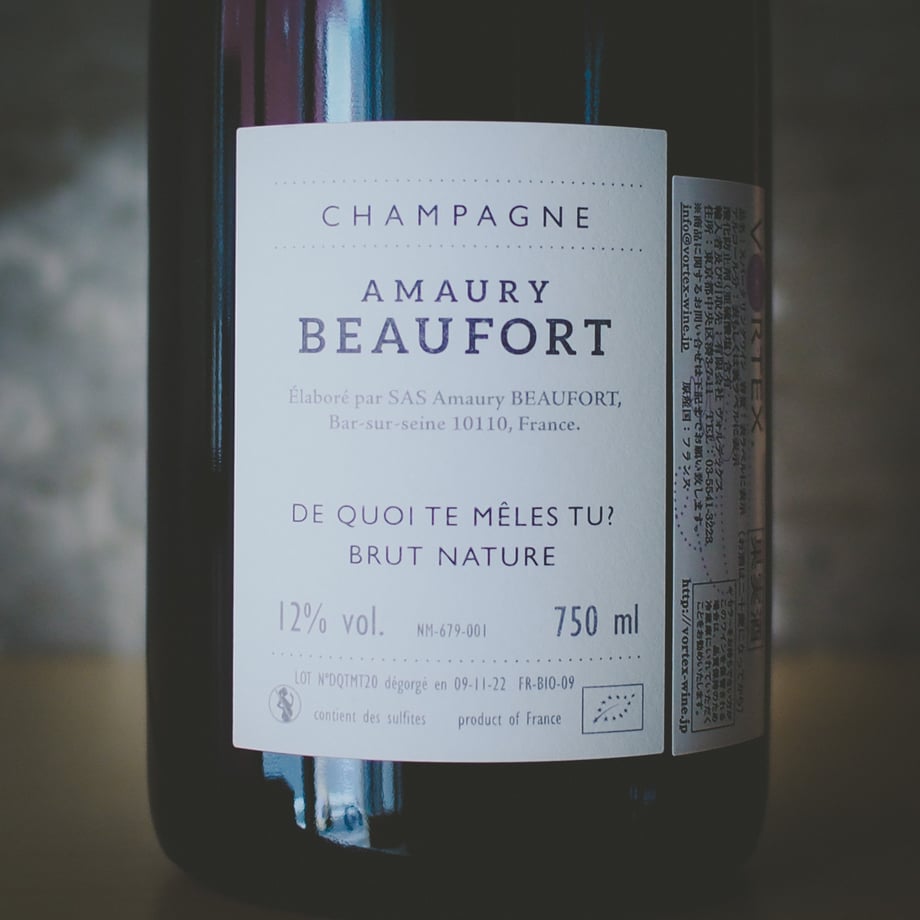
【内容量 NET】750ml
【産地 region】フランス France シャンパーニュ Champagne
【使用品種 variety】ピノ・ノワール Pinot Noir
【タイプ type】白・泡 white, sparkling
【醸造 vinification】
0.35haのキンメリジャン土壌ピノ・ノワール100% 、友人からビオの葡萄を購入したもので8月29日に収穫。フードルで発酵後に及び500Lの古樽で10ヶ月間熟成。その後15ヶ月間の瓶内二次発酵と熟成を経て、2022年11月9日にデゴルジュマン。ドザージュなし、
残糖2g/L。亜硫酸無添加。
買った葡萄についてはデブルバージュを意図的に強めに施し、酢酸エチルや揮発酸、還元の原因となる要素やトリートメントに用いた薬剤の大部分を排除することから始める。葡萄の状態次第では、これを複数回繰り返すこともある。自然発酵しない可能性については否定、2023年まで醸造しているが、常に問題なく自然発酵するとのこと。
生物相の多様性を損なうことで味わいが単調になる可能性は、否定も肯定もしない。一般的には澱を残すことでグラや充実感のあるテクスチャーに加えて、味わいではナッツを想わせる風味なども得ることができるが、還元的になりやすい傾向はある。澱の大部分を抜くことで失われる要素もあるけれど単調な味わいにはならず、むしろ舌触りが滑らで繊細、クリアな味わいとなりアモリー自身はこのスタイルを好むとのこと。
0.35 ha 100% Pinot Noir on Kimmeridgian soil, harvested on 29 August from bio-grapes purchased from a friend. After fermentation in foudres and 10 months in old 500L barrels. Then 15 months of secondary fermentation and ageing in bottle, with a degorgesmant on 9 November 2022. No dosage,
No added sulphites.
For the grapes bought in, debourbage is deliberately intensified, starting with the elimination of ethyl acetate, volatile acids, reduction-causing elements and most of the chemicals used in the treatment. Depending on the condition of the grapes, this may be repeated several times. The possibility of spontaneous fermentation is denied, and the wine is vinified until 2023, but it will always ferment spontaneously without problems.
Neither denies nor affirms the possibility of a monotonous flavour due to the loss of biota diversity. In general, leaving the lees in can give a glassy, full texture, as well as nutty flavours on the palate, but there is a tendency to become reductive. Amory himself prefers this style of wine, as it is smooth, delicate and clear on the tongue, rather than monotonous, although some elements are lost by removing most of the lees.
\\from Importer インポーターコメント//
ややオレンジがかった黄金色。
熟した安政柑や温州みかんなどの和柑橘、りんごの蜜などの果実香に、ナッツや蜂蜜などのコク深い香り、火打石のやや芳ばしさが伺えます。
口に含むと繊細な泡と赤い果実の張りのある引き締まった酸を伴い、赤い小さな野バラやフランボワーズを想わせる華やかで上品な風味が大きく膨らみます。細かな泡はエレガントな印象や軽快な様子を引き立てながら、淡雪のようにすっと溶けていきます。
口中に留まる赤い果実の華やいだ風味に、みかんなどの柑橘や蜂蜜など深みやコクを与える風味が調和し、アフターには奥行きが感じられほどよい旨みが残ります。
ややしっかりとした香りからのイメージよりも、口中では涼やかでフレッシュ感のある飲み心地で、ピノ・ノワールの上品さや可憐な印象が感じられる辛口の仕上がりです。
Golden colour with a slight orange hue.
Fruit aromas of ripe Ansei citrus, Onshu mandarin oranges and other Japanese citrus fruits and apple honey, with a rich aroma of nuts and honey, and a slight aromatic note of flint.
On the palate, the delicate bubbles are accompanied by a taut, tight acidity of red fruit, and the gorgeous, elegant flavours reminiscent of small red wild roses and raspberries expand greatly. The fine bubbles enhance the elegant impression and lightness of the wine, which melts away like light snow.
The floral flavours of red fruit that linger on the palate are harmonised with citrus fruits such as mandarin oranges and honey, which give the wine depth and richness, and the finish is deep and has a good umami quality.
The wine is cooler and fresher in the mouth than its rather robust nose suggests, with a dry finish that gives the Pinot Noir an impression of elegance and prettiness.
\\提供温度とサービスについてのお願い//
冷蔵庫内などの冷えすぎる環境ではなく、12度~19度程度のセラー温度で管理をお願いいたします。お召し上がりになる際は、氷水で10分弱冷やす程度で充分です。冷やし過ぎてしまうことで、2アイテムともにシャープな印象が強く感じられます。特にジャルディノはpH2.9で酸味が強いため冷やししすぎることで本来の柔らかさや果実味、複雑性に富んだ味わいが感じられなくなります。室温に近い状態で、シャンパーニュグラスではなくワイングラスを使用していただくことで、微細な泡が溶け込み様々な要素が緻密に絡み合う原酒の味わいをたっぷりとお楽しみいただけます。
*立野の一言コメント
どちらも1年かけて20本以上テイスティングした経験からお伝えすると、どちらも冷やす必要はなく抜栓後は室温で、ワイングラスを使用していただくこと。3日目以降から泡が抜けかかってきた頃の味わいが特に好みで、時間をかけて味わっていただくこともお勧めします。
\\Regarding serving temperature and serve//
Please keep the cellar temperature between 12°C and 19°C, not in a refrigerator or other environment that is too cold. When serving, it is sufficient to chill the item in ice water for less than 10 minutes. Over-chilling will give a strong impression of sharpness to both items. Giardino, in particular, has a pH of 2.9 and is highly acidic, so over-chilling it will prevent it from showing its original softness, fruitiness and complexity. By using a wine glass rather than a Champagne glass at close to room temperature, you can enjoy the full flavour of the original wine, with its fine bubbles and intricate intertwining of various elements.
*One comment from Tateno.
Having tasted more than 20 bottles over the past year, I can say that neither of these wines needs to be chilled, but should be served at room temperature in a wine glass after being uncorked.
\\about Vigneron 生産者について//
アモリー・ボーフォール Amaury Beaufort
アモリーはシャンパーニュ地方でビオディナミ農法を実践した先駆者として知られる老舗ドメーヌで知られるアンドレ・ボーフォールの孫で、2018年から自身のドメーヌを持ち家族とは別にシャンパーニュを造っています。10代の頃から父ジャックが率いるドメーヌで畑仕事を手伝い、その後本格的なワイン造りに関しては20代前半の時期(2003年から2008年までの5年間)に従業員として携わりました。しかし造りたいワインのスタイルが明確であり、それが父のスタイルとは全く異なっていたことから、2000年代後半に独立します。最初のドメーヌは北ブルゴーニュ(シャブリ、トネールエリア)に持ち、10年にわたりナチュラルワイン造っていました。
合計で15年の経験を積み、2018年にシャンパーニュ地方南部のバル・シュル・セーヌで生産者として二度目のスタートを切りました。父親から受け継いだ畑の区画面積は0.88haのみですが、土壌は1971年以降一切の除草剤や化学肥料を使われていない素晴らしい状態のものです。
「区画面積はとても小さいけれど、一般的には見過ごしがちな区画特有の細かい要素に注意を払う事ができ、それらが葡萄にどのような影響を及ぼすのか観察できる点が、私にとってとても大切です。」と彼は話します。畑では雑草を排除せず、トリートメントも常に必要最低限に抑え、夏には高く生えた枝と葉も切り落とさずにトレサージュ(編む作業)を行う事でブドウの実に影を作り過度な日射しから守るなど、様々な工夫が施されています。
醸造は至ってシンプルで亜硫酸(SO2)を含む添加物は使いません。これはシャンパーニュ地方では非常に珍しいケースで、ワインの味わいがよりピュアに仕上がります。(*2021年のみプレス時にSO2を10mg/L使用:悪天候で葡萄の健康状態が理想的ではなかったため)発酵及び熟成期間中は液体の動きが活発なフードルと、その反対に活発ではない樽のそれぞれの利点を活かし、タイミングを見てそれぞれのワインを入れ替えます。
ジャルディノの素晴らしい土壌と豊富な経験、優しくて堅実なアモリーのワインには、共通して突き抜けるように強い酸とミネラルがありますが、この特徴に加えて繊細な泡とピュアな味わいにとても魅力を感じます。正確で主張が少なく、優しささえも伺えるシャンパーニュ。そんな彼の人柄が、きっと一杯のグラスから伝わってくることでしょう。
*畑及び醸造
ポリジーエリアにジャルディノを所有。0.6haのキンメリジャン土壌(樹齢60年のピノ・ノワール)と0.28haのポルトランディアン土壌(樹齢10年のシャルドネ)。南東向きの緩やかな斜面で粘土の強い石灰質。
醸造:基本的にはフードルで発酵後、ドゥミミュイ樽で熟成、瓶詰め前の数ヶ月間は再びフードルで寝かせ仕上げる。
Amory is the grandson of André Beaufort, known for his long-established domaine, known as a pioneer of biodynamic farming in Champagne, and has had his own domaine since 2018, making Champagne separately from his family From his teenage years, he helped in the vineyard work at the domaine led by his father Jacques. He then began his real winemaking career as an employee in his early twenties (five years from 2003 to 2008). However, he decided in the late 2000s to set up his own business as he had a clear style of wine he wanted to make, which was very different from his father's style. His first estate was in Northern Burgundy (Chablis, Tonnaire area), where he made natural wines for 10 years.
After a total of 15 years' experience, in 2018 he made a second start as a producer in Bar-sur-Seine in southern Champagne. The vineyard he inherited from his father has a plot size of only 0.88 ha, but the soil is in excellent condition and has not been treated with any herbicides or chemical fertilisers since 1971.
The plot size is very small, but it is very important to me because it allows me to pay attention to the small plot-specific elements that are generally overlooked and to observe how they affect the grapes," he says. He says. In the vineyard, weeds are kept to a minimum, treatments are always kept to a minimum, and in the summer, high branches and leaves are not cut down but tressaged (woven) to shade the grapes and protect them from excessive sunlight.
Vinification is very simple and no additives, including sulphites (SO2), are used. This is very rare in Champagne and results in wines with a more pure flavour. (*Only in 2021, 10 mg/L of SO2 was used during pressing, as the grapes were not in ideal health due to adverse weather conditions.) During fermentation and maturation, the wines are switched at the right moment, taking advantage of the liquid movement of the foudres and, conversely, the less active barrels.
The wines of Giardino, with its excellent soils and wealth of experience, and the gentle, robust Amory wines, have in common a penetrating acidity and minerality, but this character is also very attractive with its delicate bubbles and purity of flavour. His Champagnes are precise, unassertive and even gentle. His personality can surely be felt in every glass.
Vineyards and vinification
Jardinot in the Polisy area, 0.6 ha of Kimmeridgian soil (60-year-old Pinot Noir vines) and 0.28 ha of Portlandian soil (10-year-old Chardonnay vines). Gentle southeast-facing slopes with strong limestone with clay.
Vinification: basically fermentation in foudres followed by ageing in demi-muids barrels and finishing again in foudres for a few months before bottling.
その他のアイテム
-
- バティスト・ランボ "マセラート" | Baptiste Ramboz "Macérator" 2022/2023
- ¥7,700
-
- バティスト・ランボ "ブランジング" | Baptiste Ramboz "Brindzingue" 2022
- ¥8,690
-
- ジャン・クリストフ・ガルニエ "ルシュフェール” | Jean-Christophe Garnier "ROUCHEFERT" 2024
- ¥6,160
-
- ジャン・クリストフ・ガルニエ "レ・ヌエット” | Jean-Christophe Garnier "Les Nouettes" 2025
- ¥4,950
-
- ブルノ・デュシェン "キタ" | Bruno Duchene "KITA" 2025
- ¥7,700
-
- イル ヴェイ ロッソ | Il Vei Rosso 2023 (1500ml)
- ¥4,180